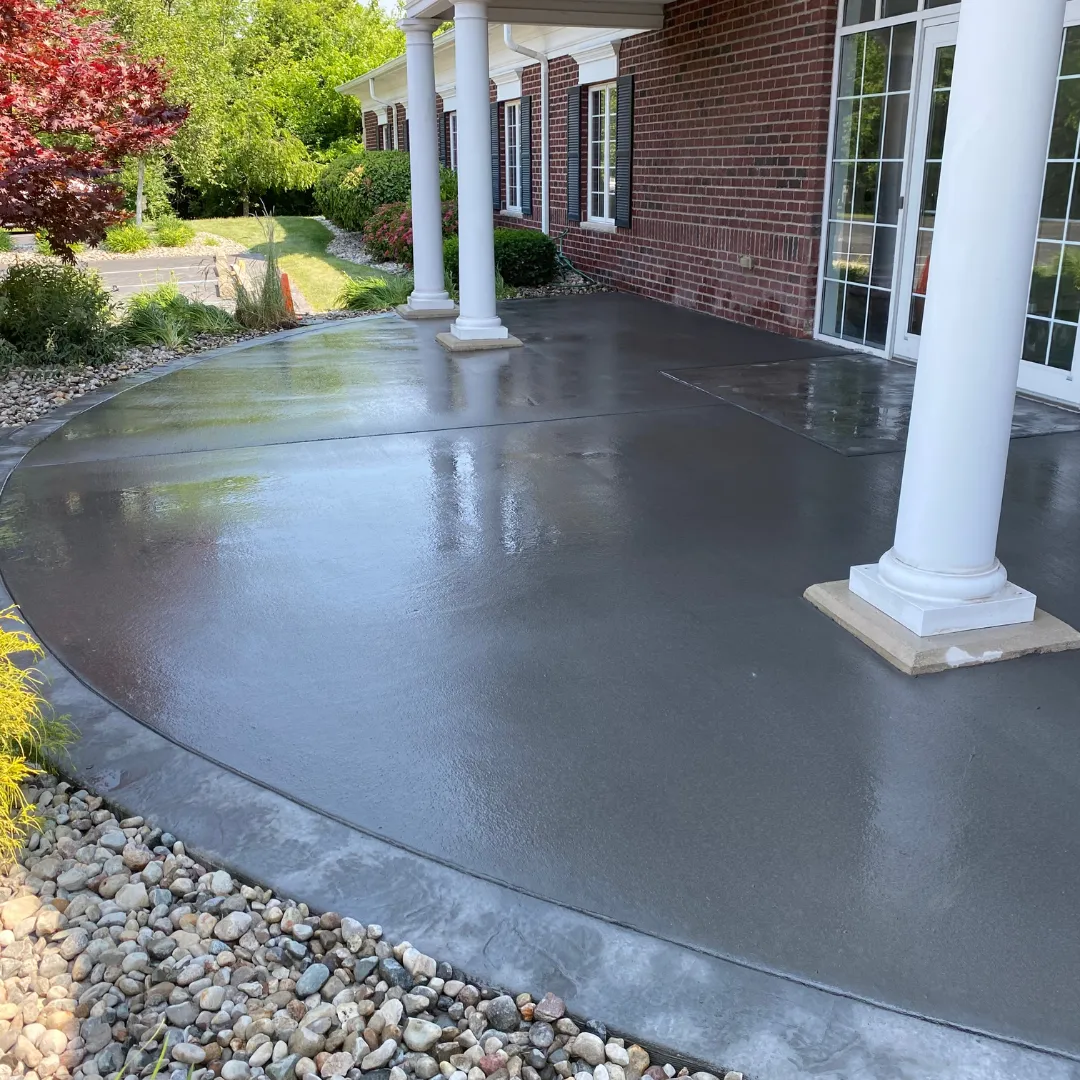
Concrete Pads in Toledo, OH: 7 Projects That Need a Solid Foundation
Not every concrete project needs to be a driveway, patio, or sidewalk.
Sometimes what you need is simply a strong, level surface for another structure or piece of equipment.
That's where a concrete pad comes in.
Concrete pads can provide a practical base for a variety of residential and commercial applications. But despite their relatively simple appearance, successful pads still depend on careful planning, appropriate site preparation, and professional concrete installation.
For property owners considering concrete pad installation in Toledo, OH, Paul Turner Concrete & Excavating provides both concrete and excavation services to help prepare and build projects from the ground up.
Here are seven situations where a concrete pad may be worth considering.
1. Concrete Pads for Sheds
A shed needs a stable place to sit.
Depending on the shed design and project requirements, a concrete pad can provide a solid base while creating a clean, durable surface underneath the structure.
Before installation, several factors need consideration.
What size will the shed be?
Where will it sit on the property?
How does water currently move through the area?
What are the site conditions?
Will excavation or grading be necessary?
Planning the concrete and shed together can help prevent situations where the slab dimensions or location don't match the structure.
2. Concrete Pads for Outdoor Equipment
Certain outdoor equipment may benefit from a stable, level surface.
A properly planned concrete pad can create a designated area for equipment rather than placing it directly over soil, grass, or another uneven surface.
Dimensions and specifications should be determined based on the particular equipment and its installation requirements.
This is an important point: don't assume every concrete pad should be built the same way.
Its intended purpose should guide the project.
3. Concrete Pads for Garbage and Recycling Areas
Trash and recycling containers placed directly on soil or grass can create an inconvenient area around a property.
A small concrete pad can provide a cleaner, defined surface for storing containers.
It may also make the area easier to access and maintain.
When planning the location, consider convenience, visibility, drainage, and how the containers need to move between the storage area and collection point.
4. Concrete Pads for Outdoor Storage
Outdoor storage doesn't always require a large structure.
Homeowners may need a solid area for storage boxes, equipment, landscaping supplies, or other items.
A concrete pad can create a dedicated surface that keeps the area more organized and separates stored items from bare ground.
As with any exterior concrete project in Toledo, grading and drainage should be considered before installation.
5. Concrete Pads for Utility Areas
Some residential or commercial utility applications may require or benefit from a concrete base.
The requirements will vary according to the equipment involved.
Before pouring concrete, confirm the necessary dimensions, clearances, load requirements, and specifications with the appropriate equipment manufacturer, installer, contractor, or other professional.
Once those requirements are known, the concrete contractor can build the pad accordingly.
6. Concrete Pads for Small Outdoor Structures
Certain outdoor structures may require a stable base.
Rather than treating the concrete as an afterthought, coordinate the slab with the planned structure from the beginning.
The project may require:
Layout
Excavation
Grading
Base preparation
Forming
Concrete placement
Finishing
Site conditions will determine which steps are necessary.
Paul Turner Concrete & Excavating provides excavation services including grading, site preparation, and foundation excavation in the Toledo area, allowing the groundwork to be addressed as part of the larger project.
7. Concrete Pads for Commercial Uses
Concrete pads aren't limited to residential properties.
Businesses may also need dedicated concrete surfaces for equipment, storage, waste-management areas, or other operational needs.
Commercial applications can vary significantly, so the pad needs to be planned around its intended purpose.
Dimensions, loads, access, drainage, and surrounding surfaces may all need to be considered.
Paul Turner Concrete & Excavating serves both residential and commercial properties in Toledo and surrounding areas.
Why Can't You Just Pour Concrete on the Ground?
Concrete is strong, but it still depends on what's beneath it.
If a pad is installed over an unsuitable or poorly prepared area, movement beneath the concrete can affect the finished surface.
Site preparation may involve removing material, excavating, grading, leveling, or establishing an appropriate base.
This is why even a relatively small slab should be approached as a complete construction project rather than simply a surface application.
Grading and Drainage Matter
Before installing an outdoor concrete pad, consider what happens when it rains or snow melts.
Does water currently collect in that location?
Will the new slab change where runoff travels?
Is the pad close to the house or another structure?
Will surrounding grades direct water appropriately?
Water management is an important part of exterior concrete planning.
Paul Turner Concrete & Excavating's existing guidance emphasizes considering drainage before installing new concrete because hard surfaces can influence how water moves around a property.
Choose the Location Carefully
Moving a concrete pad after installation isn't exactly convenient.
Take time to choose its location before work begins.
Think about:
Accessibility
Property layout
Drainage
Nearby structures
Utilities
Future construction plans
Landscaping
Equipment access
Intended use
For a shed or other structure, confirm its specifications before determining final pad dimensions.
Planning first can prevent unnecessary complications later.
Think About Future Projects
Suppose you're installing a concrete pad today but already know you want to make additional improvements in the same part of your property.
Tell your contractor.
Future plans could affect the location, dimensions, grading, or accessibility of today's project.
For example, you may eventually add a walkway, driveway extension, landscaping feature, garage, or another structure nearby.
Considering those plans now can help your property improvements work together rather than conflict with one another.
Concrete and Excavation Under One Roof
A concrete pad is a good example of why concrete and excavation often go hand in hand.
The finished slab may be the visible result, but excavation and site preparation can be critical parts of creating the area where that slab will be installed.
Paul Turner Concrete & Excavating provides both services in Toledo, helping property owners manage projects that require groundwork as well as concrete installation.
Concrete Pad Installation in Toledo, OH
If you need a concrete pad for your Toledo-area property, start by determining what the surface needs to support and where it needs to be located.
From there, an experienced concrete contractor can evaluate the site and determine the preparation required.
Paul Turner Concrete & Excavating serves homeowners and businesses throughout Toledo and nearby Northwest Ohio communities with professional concrete and excavation services.
Start Your Toledo Concrete Project
A relatively small concrete pad still deserves proper planning.
From excavation and grading to concrete placement and finishing, each stage contributes to the finished project.
If you're considering a concrete pad in Toledo, OH, contact Paul Turner Concrete & Excavating to discuss your project and request a free quote.
Whether you're preparing for a shed, equipment, storage area, or another application, start with a properly prepared surface built for its intended purpose.
